
Our Courses
Comprehensive programs designed to help you excel in government exams and services.

Programs Designed for Your Success
SSC
SSC exams lead to government jobs known for their stability and job security. Once appointed, employees enjoy long-term employment with minimal risk of layoffs.
Introduction:
The SSC (Staff Selection Commission) exams are a series of competitive exams conducted by the Staff Selection Commission in India. These exams are held to recruit candidates for various positions in the central government and its affiliated organizations. Here’s an overview of the key aspects:
Types of SSC Exams:
1.SSC CGL (Combined Graduate Level):
1.SSC CGL (Combined Graduate Level):
Purpose: For recruitment to Group B and Group C posts in various government departments.
Eligibility: Bachelor’s degree from a recognized university.
Stages:
- Tier-I: Computer-Based Examination (Objective)
- Tier-II: Computer-Based Examination (Objective)
- Tier-III: Descriptive Paper (Pen and Paper based)
- Tier-IV: Skill Test/Computer Proficiency Test (if applicable)
2.SSC CHSL (Combined Higher Secondary Level):
2.SSC CHSL (Combined Higher Secondary Level):
Purpose: For recruitment to lower-level posts such as LDC (Lower Division Clerk), DEO (Data Entry Operator), and other clerical positions.
Eligibility: 12th pass from a recognized board.
Stages:
- Tier-I: Computer-Based Examination (Objective)
- Tier-II: Descriptive Paper (Pen and Paper based)
- Tier-III: Skill Test/Typing Test (if applicable)
3.SSC JE (Junior Engineer):
3.SSC JE (Junior Engineer):
Purpose: For recruitment to the post of Junior Engineer in various engineering departments.
Eligibility: Diploma or degree in Engineering in the relevant field.
Stages:
- Paper-I: Computer-Based Examination (Objective)
- Paper-II: Conventional Paper (Descriptive)
4.SSC MTS (Multi Tasking Staff):
4.SSC MTS (Multi Tasking Staff):
Purpose: For recruitment to Group C posts such as peons, watchmen, and other support staff.
Eligibility: 10th pass from a recognized board.
Stages:
- Paper-I: Computer-Based Examination (Objective)
- Paper-II: Descriptive Paper (Pen and Paper based)
5.SSC Stenographer:
5.SSC Stenographer:
Purpose: For recruitment to the posts of Stenographer Grade C and D.
Eligibility: 12th pass from a recognized board.
Stages:
- Paper-I: Computer-Based Examination (Objective)
- Paper-II: Skill Test (Stenography Test)
6.SSC CPO (Central Police Organization):
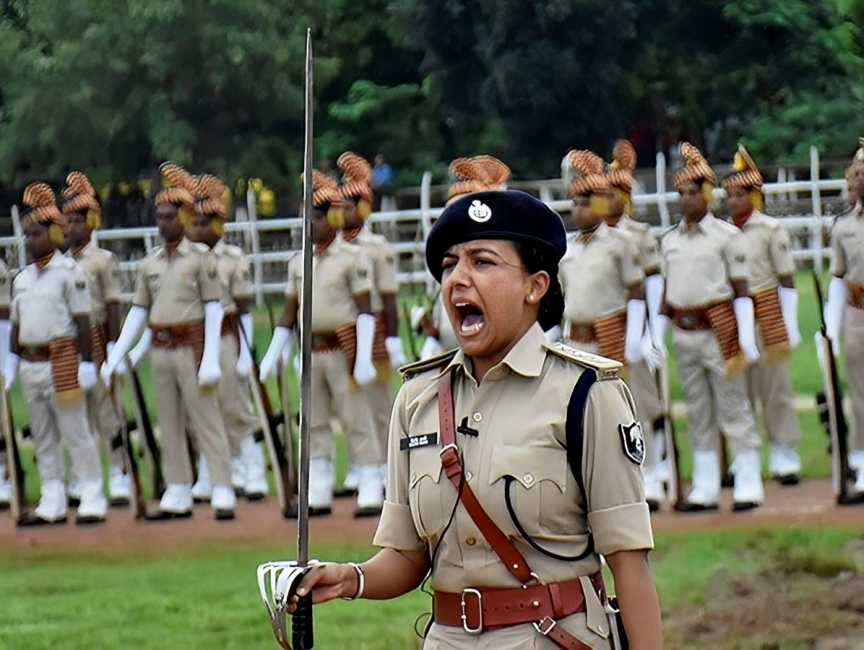
Purpose: For recruitment to the posts of Sub-Inspector in various Central Police Organizations.
Eligibility: Bachelor’s degree from a recognized university.
Stages:
- Paper-I: Computer-Based Examination (Objective)
- Paper-II: Computer-Based Examination (Objective)
- Physical Standard Test (PST)/Physical Endurance Test (PET)
- Medical Examination
General Eligibility Criteria:
Age Limit: Generally, candidates should be between 18 to 30 years, but it can vary based on the exam and category.
Educational Qualification: Varies by exam; generally, 10th, 12th, or a degree depending on the position.
Nationality: Indian citizens, and sometimes candidates from Nepal, Bhutan, or Tibetan refugees who came to India before January 1, 1962.
Application Process:
Online Application: Most SSC exams require candidates to apply online through the official SSC website.
Fee: There is usually an application fee, but exemptions are provided for certain categories (SC/ST, women, etc.).
Syllabus: Familiarize yourself with the detailed syllabus and exam pattern.
Previous Papers: Practice previous years’ papers and take mock tests.
Time Management: Develop a study plan and stick to it.
Current Affairs: Stay updated with current events and general knowledge.
To More Details Join THE PAGE ACADEMY
Railway
Jobs in Indian Railways are considered highly stable and secure, given the essential nature of rail transport in India.
Being a government job, it comes with the assurance of job security which is often more stable compared to private sector jobs.
Introduction:
The Railway exams in India, conducted by various organizations like the Railway Recruitment Boards (RRBs) and Railway Recruitment Cells (RRCs), offer numerous benefits to candidates who secure positions through these exams. Here’s a look at some of the key benefits:
Types of Railway Exams
1.RRB NTPC (Non-Technical Popular Categories):

1.RRB NTPC (Non-Technical Popular Categories):
Purpose: Recruitment for non-technical posts such as Junior Clerk, Account Clerk, and Ticket Collector.
Eligibility: 12th pass or a degree from a recognized university, depending on the position.
Stages:
Stage 1: Computer-Based Test (CBT-1)
Stage 2: Computer-Based Test (CBT-2)
Stage 3: Skill Test (for certain posts)
Stage 4: Document Verification and Medical Examination
2.RRB JE (Junior Engineer):
Purpose: Recruitment for the post of Junior Engineer, Junior Engineer (Information Technology), and Depot Material Superintendent.
Eligibility: Diploma or degree in Engineering in the relevant field.
Stages:
Stage 1: Computer-Based Test (CBT-1)
Stage 2: Computer-Based Test (CBT-2)
Stage 3: Document Verification and Medical Examination
3.RRB ALP (Assistant Loco Pilot) and Technician:
Purpose: Recruitment for the posts of Assistant Loco Pilot and various Technician positions.
Eligibility: ITI or Diploma in relevant trades, or 10th pass with experience.
Stages:
Stage 1: Computer-Based Test (CBT-1)
Stage 2: Computer-Based Test (CBT-2)
Stage 3: Computer-Based Aptitude Test (for ALP only)
Stage 4: Document Verification and Medical Examination
4.RRB Group D:
Purpose: Recruitment for various Group D posts such as Track Maintainer, Helper, and Assistant.
Eligibility: 10th pass or ITI.
Stages:
Stage 1: Computer-Based Test (CBT)
Stage 2: Physical Efficiency Test (PET)
Stage 3: Document Verification and Medical Examination
5.RRC (Railway Recruitment Cell) Exams:
Purpose: Recruitment for various positions at the regional level, often for Group C and D posts.
Eligibility: Varies by position; generally 10th pass or ITI.
Process
Age Limit: Typically ranges from 18 to 30 years, but may vary based on the specific exam and category. Age relaxations are available for reserved categories.
Educational Qualification: Depends on the position. Generally, it ranges from 10th pass to degree holders.
Online Application: Candidates need to apply online through the official Railway Recruitment Board (RRB) or Railway Recruitment Cell (RRC) websites.
Fee: An application fee is usually required, with exemptions for certain categories (e.g., SC/ST, women).
Syllabus and Exam Pattern: Study the syllabus and exam pattern specific to the post you are applying for.
Previous Papers and Mock Tests: Practice with previous years’ papers and take mock tests to gauge your preparation.
Time Management: Develop a study plan and allocate time to each subject.
Current Affairs: Keep up with current events and general knowledge as they are often included in the exams.
Written Exams: Generally consist of objective-type questions and cover subjects such as General Awareness, Arithmetic, General Intelligence, and Reasoning.
Skill Tests: Depending on the position, skill tests or physical tests may be required.
Document Verification: Verification of educational and other documents.
Medical Examination: To ensure the candidate is fit for the role.
Job Security and Stability: Government jobs in railways are known for their stability and security.
Attractive Salary and Perks: Competitive salaries, allowances, and benefits are offered.
Career Growth: Opportunities for promotions and career advancement.

Bank
Bank jobs are known for their stability and security compared to many other sectors. Once you secure a position, you can enjoy a stable career with a well-defined career path.
Introduction:
Bank exams are conducted to recruit candidates for various positions in banking institutions, including clerks, probationary officers, and specialist officers. These exams assess candidates’ suitability for roles in the banking sector based on their knowledge, skills, and abilities.
Types of Bank Exams:
1.Clerical Exams:
Objective: To fill positions like bank clerks or assistants.
Common Exams: SBI Clerk, IBPS Clerk.
2.Probationary Officer (PO) Exams:
Objective: To recruit probationary officers who are trained for managerial roles.
Common Exams: SBI PO, IBPS PO.
3.Specialist Officer (SO) Exams:
Objective: To hire officers for specialized roles in IT, HR, law, and more.
Common Exams: SBI SO, IBPS SO.
Exam Structure:
1.Preliminary Examination:
- Format: Multiple-choice questions (MCQs).
- Sections: Typically includes sections like Quantitative Aptitude, Reasoning Ability, and English Language.
- Purpose: To shortlist candidates for the main examination.
2.Main Examination:
- Format: MCQs and/or descriptive questions.
- Sections: May include sections like Data Analysis & Interpretation, General Awareness, Banking Awareness, and Computer Knowledge.
- Purpose: To assess candidates’ in-depth knowledge and problem-solving abilities.
3.Interview:
- Format: Personal interview.
Purpose: To evaluate candidates’ communication skills, personality, and suitability for the banking role.
4.Additional Tests:
- For Specialist Roles: May include specialized tests related to the field of expertise.
Preparation Tips
1.Understand the Exam Pattern: Familiarize yourself with the exam format, sections, and types of questions.
2.Study Regularly: Develop a study schedule and stick to it, covering all topics thoroughly.
3.Practice with Mock Tests: Take regular practice tests to improve time management and identify strengths and weaknesses.
4.Stay Updated: Keep abreast of current affairs and banking-related news.
5.Review Previous Papers: Analyze previous years’ question papers to understand the exam trends and question patterns.
Key Skills Assessed
- Quantitative Aptitude: Numerical ability and problem-solving skills.
- Reasoning Ability: Analytical and logical thinking.
- English Language: Grammar, comprehension, and vocabulary.
- General Awareness: Knowledge of current events, banking sector updates, and general knowledge.
- Computer Knowledge: Basic understanding of computer operations and applications (for certain roles).
Eligibility Criteria
Education: Generally requires a Bachelor’s degree from a recognized university.
Age Limit: Typically ranges between 20 to 30 years, with age relaxations for reserved categories.
To More details join THE PAGE ACADEMY
MBA CET
The MBA CET exam is a state-level entrance test for admission into MBA programs in Maharashtra. It evaluates candidates on verbal ability, quantitative aptitude, logical reasoning, and general knowledge.
Introduction:
The MBA CET (Common Entrance Test) is a state-level entrance exam for MBA programs in Maharashtra, India. The exam pattern for the 2024 session is expected to follow a similar structure to previous years, though it’s always good to check the official website for the most accurate and up-to-date information. Here’s a general overview of the subject-wise exam pattern
1. General Awareness (GA)

- Content: This section tests your awareness of current affairs, business news, and general knowledge.
- Question Type: Multiple-choice questions (MCQs).
- Key Areas: Current events, business environment, economics, and static GK.
2. Quantitative Aptitude (QA)
- Content: Measures your ability to solve mathematical problems and interpret data.
- Question Type: MCQs.
- Key Areas: Arithmetic (percentages, ratios, etc.), algebra, geometry, and data interpretation.
3. Logical Reasoning (LR)
- Content: Assesses your logical thinking and problem-solving skills.
- Question Type: MCQs.
- Key Areas: Seating arrangement, syllogisms, puzzles, and logical deductions.
4. Verbal Ability and Reading Comprehension (VARC)
Content: Evaluates your command over the English language and ability to comprehend written material.
Question Type: MCQs.
Key Areas: Grammar, vocabulary, sentence correction, and reading comprehension passages.
General Exam Details:
Duration: Typically around 150 minutes.
Total Questions: Approximately 200 questions.
Scoring: Generally, 1 mark per question with a negative marking scheme for incorrect answers.
Preparation Tips:
Practice Previous Papers: Familiarize yourself with the question types and format.
Current Affairs: Stay updated with the latest news and business developments.
Mathematics and Logic: Regularly practice quantitative and logical reasoning problems.
English Proficiency: Improve your vocabulary and grammar through reading and exercises.
UPSC
The UPSC Civil Services Examination is a prestigious Indian competitive exam for recruiting top government officials, including IAS, IPS, and IFS officers. It consists of three stages: Preliminary, Main, and Interview, testing a broad range of knowledge and skills.
Introduction:
For the UPSC Civil Services Examination, the subject-wise exam pattern is detailed and structured to test a wide range of knowledge and skills. Here’s an overview of the pattern for each subject in the Preliminary and Main Examination stages:
Types of Bank Exams:
1. Preliminary Examination (Prelims):
The Preliminary Examination consists of two objective-type papers:
a. General Studies Paper I
Marks: 200
Duration: 2 hours
Syllabus:
Current Events: National and international news, events, and issues.
History of India: Ancient, medieval, and modern history.
Geography: Physical, social, and economic geography of the world and India.
Indian Polity and Governance: Constitution, political system, governance, public policy.
Economic and Social Development: Sustainable development, poverty, inclusion, demographics.
General Science: Environmental ecology, biodiversity, climate change, and general science.
b. Civil Services Aptitude Test (CSAT) Paper II
Marks: 200
Duration: 2 hours
Syllabus:
Comprehension: Passage-based questions.
Interpersonal Skills: Communication skills, social skills.
Logical Reasoning and Analytical Ability: Problem-solving and logical reasoning questions.
Decision Making and Problem Solving: Situational judgment and decision-making scenarios.
General Mental Ability: Data interpretation, numerical reasoning, and basic mathematics.
Basic Numeracy: Numbers and their relations, orders of magnitude, etc.
2. Main Examination (Mains):
The Main Examination is descriptive and consists of nine papers, of which two are qualifying papers and seven are counted for ranking:
a. Qualifying Papers:
Paper A: Indian Language (300 marks)
Testing language skills, comprehension, and translation (specific to the chosen language).
Paper B: English (300 marks)
Testing English comprehension, usage, and vocabulary.
b. Papers Counted for Ranking:
Paper I: Essay (250 marks)
Writing essays on various topics; focus on clarity, coherence, and depth of analysis.
Paper II: General Studies I (250 marks)
Indian Heritage and Culture: Art, literature, and cultural heritage.
History of India: Ancient, medieval, and modern history.
Geography: Physical and human geography of the world and India.
Paper III: General Studies II (250 marks)
Governance: Structure, functioning, and reforms in governance.
Constitution: Understanding of the Indian Constitution and its application.
Polity: Political system, federalism, and political processes.
International Relations: India’s foreign policy, international organizations, and global issues.
Paper IV: General Studies III (250 marks)
Technology: Emerging technologies and their impact.
Economic Development: Economic policies, growth, and development.
Bio-diversity and Environment: Conservation, environmental issues, and climate change.
Security: Internal and external security issues.
Disaster Management: Preparedness, response, and mitigation.
Paper V: General Studies IV (250 marks)
Ethics: Principles of ethics, ethical issues in public administration, and governance.
Integrity: Values and integrity in public life.
Aptitude: Decision-making and problem-solving.
Paper VI & VII: Optional Subject Papers (250 marks each)
Candidates choose one subject from a list of optional subjects (e.g., Geography, History, Public Administration, etc.).
Each subject has two papers that test in-depth knowledge and understanding of the chosen subject.
MPSC
The Maharashtra Public Service Commission (MPSC) exam is known for its rigorous selection process, which includes a Preliminary Exam, Main Exam, and Personal Interview, aiming to identify candidates for diverse roles in Maharashtra’s state services. It covers a broad spectrum of subjects, integrating regional knowledge with national and international affairs.
Introduction:
For the MPSC (Maharashtra Public Service Commission) exam in 2024, the exam pattern typically includes three stages: the Preliminary Exam, the Main Exam, and the Personal Interview. Here’s an overview of the subject-wise exam pattern:
1. Preliminary Exam
The Preliminary Exam serves as a screening test to filter candidates for the Main Exam. It consists of two papers:
Paper I: General Studies
Content: Covers a broad range of general knowledge, including current events, history, geography, politics, economics, and culture.
Format: Objective-type multiple-choice questions (MCQs).
Duration: 2 hours.
Paper II: Civil Services Aptitude Test (CSAT)
Content: Tests analytical ability, reasoning skills, quantitative aptitude, and English comprehension.
Format: Objective-type MCQs.
Duration: 2 hours.
2. Main Exam
The Main Exam is more detailed and consists of several papers:
Paper I: Marathi
Content: Includes essay writing, comprehension, and grammar.
Format: Descriptive type.
Duration: 3 hours.
Paper II: English
Content: Tests comprehension, précis writing, and grammar.
Format: Descriptive type.
Duration: 3 hours.
Paper III: General Studies I
Content: Indian History, Geography, and Culture.
Format: Descriptive type.
Duration: 3 hours.
Paper IV: General Studies II
Content: Indian Constitution, Governance, Polity, and Social Justice.
Format: Descriptive type.
Duration: 3 hours.
Paper V: General Studies III
Content: Economic Development, Science and Technology, Environment.
Format: Descriptive type.
Duration: 3 hours.
Paper VI: General Studies IV
Content: Ethics, Integrity, and Aptitude.
Format: Descriptive type.
Duration: 3 hours.
Paper VII: Optional Subject Paper I
Content: Based on the optional subject chosen by the candidate.
Format: Descriptive type.
Duration: 3 hours.
Paper VIII: Optional Subject Paper II
Content: Based on the optional subject chosen by the candidate.
Format: Descriptive type.
Duration: 3 hours.
3. Personal Interview
- Content: Candidates are assessed on their personality, general awareness, and suitability for a career in the civil services.
- Format: Interview by a panel.
- Duration: Typically around 30-45 minutes.
A. General Awareness (GA)
Pattern: Multiple-choice questions (MCQs).
Syllabus:
Current Affairs: National and international news, sports, awards, and important events.
Business Environment: Economic policies, business news, market trends, and industry developments.
General Knowledge: Important historical events, political and social developments, and significant global issues.
B. Quantitative Aptitude (QA)
Pattern: Multiple-choice questions (MCQs).
Syllabus:
Arithmetic: Percentages, ratios, proportions, profit and loss, simple and compound interest, time and work, and speed and distance.
Algebra: Linear equations, quadratic equations, and functions.
Geometry: Basic concepts of lines, angles, triangles, and circles.
Data Interpretation: Tables, bar graphs, pie charts, and line graphs.
C. Logical Reasoning (LR)
Pattern: Multiple-choice questions (MCQs).
Syllabus:
Analytical Reasoning: Seating arrangements, puzzles, logical sequences, and series.
Verbal Reasoning: Syllogisms, statements and conclusions, and analogies.
Critical Reasoning: Arguments, assumptions, and conclusions.
D. Verbal Ability and Reading Comprehension (VARC)
Pattern: Multiple-choice questions (MCQs).
Syllabus:
English Grammar: Sentence correction, verb tenses, prepositions, and modifiers.
Vocabulary: Synonyms, antonyms, and context-based meaning.
Reading Comprehension: Passage-based questions focusing on understanding, analysis, and inference.
Exam Details
Duration: Typically around 150 minutes.
Total Questions: Approximately 200 questions.
Scoring: Usually, 1 mark per question with negative marking for incorrect answers (commonly 0.25 marks).
Preparation Tips:
Review Previous Papers: Helps in understanding question patterns and difficulty levels.
Current Affairs: Regularly read newspapers and follow current events.
Subject Mastery: Focus on both general studies and optional subjects as per the syllabus.
Practice Writing: Develop essay and descriptive writing skills for the Main Exam papers.
NDA
The NDA exam selects future Indian Armed Forces officers through a rigorous written test and SSB interview process. It requires candidates to excel in Mathematics and General Studies, followed by a comprehensive assessment of personality and leadership skills.
Introduction:
The NDA (National Defence Academy) exam is conducted in India to select candidates for admission into the National Defence Academy, which trains future officers for the Indian Army, Navy, and Air Force. Here’s an overview of the exam:
1. Exam Structure:
a. Written Examination:
Paper 1: Mathematics
Duration: 2.5 hours
Topics include Algebra, Trigonometry, Geometry, Calculus, Statistics, and Probability.
Paper 2: General Studies
Duration: 2.5 hours
This paper is divided into two sections:
English: Testing comprehension, vocabulary, and usage.
General Knowledge: Covers current events, history, geography, and general science.
b. SSB Interview:
Candidates who qualify the written exam are called for the Services Selection Board (SSB) interview.
The SSB process includes:
Psychological Tests: Assessing personality and mental acuity.
Group Tasks: Evaluating teamwork and leadership skills.
Personal Interview: Gauging suitability for a career in the armed forces.
2. Eligibility Criteria:
a. Nationality:
Indian citizens, or subjects of Bhutan/Nepal, or Tibetan refugees who came to India before January 1, 1962.
b. Age Limit:
Generally between 16.5 and 19.5 years of age.
c. Educational Qualification:
For Army Wing: 12th class pass with any stream from a recognized board.
For Navy and Air Force Wings: 12th class pass with Physics and Mathematics from a recognized board.
3. Exam Pattern:
Mode of Exam: Pen and paper-based.
Marking Scheme:
Each paper carries 300 marks.
Mathematics and General Studies papers are both objective-type.
There is negative marking for incorrect answers.
4. Preparation Tips:
- Mathematics: Focus on understanding concepts and practicing problems regularly.
- General Studies: Read newspapers, current affairs magazines, and standard textbooks for general knowledge.
- English: Enhance vocabulary, practice comprehension exercises, and improve grammar.
5. Important Dates:
- Notification Release: Usually in the first half of the year.
- Exam Dates: Generally held twice a year, in April and September.
- Result Declaration: Results are announced a few months after the exams.
6. Key Points:
Physical Fitness: Ensure you meet the physical and medical standards set by the NDA.
Practice: Regular practice of previous years’ question papers and mock tests can be very beneficial.
Current Affairs: Stay updated with recent developments in politics, sports, science, and technology.
To More Details Join THE PAGE ACADEMY